Sump pump installation in Barrie
A sump pump is the active heart of most interior waterproofing systems and many exterior drainage setups. It lifts groundwater collected by weeping tile and discharges it away from the foundation. In Barrie, pumps work hardest during spring melt and multi-day rains—exactly when power outages are also more likely.
This page covers primary pumps, battery backups, discharge rules, testing, constant-running diagnosis, and how Barrie’s Disconnect to Protect rebate can intersect with sump work. Brand emergency response and pricing remain hold for verification.
What a complete sump setup includes
- Sealed or open basin sized to the inflow
- Primary pump with reliable float or electronic switch
- Check valve and discharge line to an approved outlet
- Optional battery backup or secondary pump
- Water alarm for early warning
A pump alone is not waterproofing. Without drains directing water to the pit, wall and cove leaks continue. Pair pump work with the drainage method that matches your diagnosis.
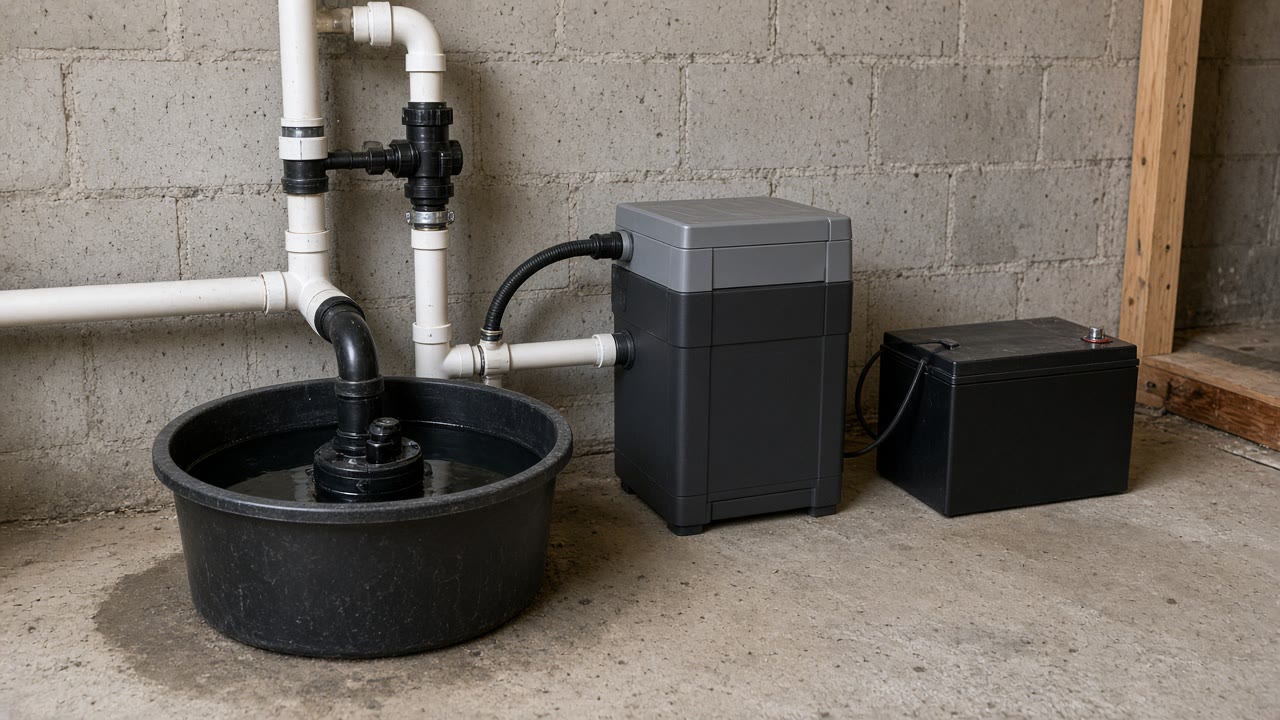
Battery backup, second pumps, and generators
Battery backups typically add a DC pump that starts if the water rises above the primary float—covering outages and primary failure for hours, not necessarily days. Extended outages may need a generator. Water-powered backups use municipal pressure; they need backflow protection and are a poor fit if city water fails with the power. Match redundancy to how wet your pit runs in March.
Is constant running normal?
Frequent cycling during thaw can be normal on wet Barrie lots. Non-stop running without pause risks burnout and needs diagnosis: recirculating discharge near the foundation, a failed check valve, mouse-chewed outdoor hose, or overwhelming inflow. Do not unplug a working pump during melt. Extend discharge downhill onto pervious ground when safe and legal.
How to test your pump
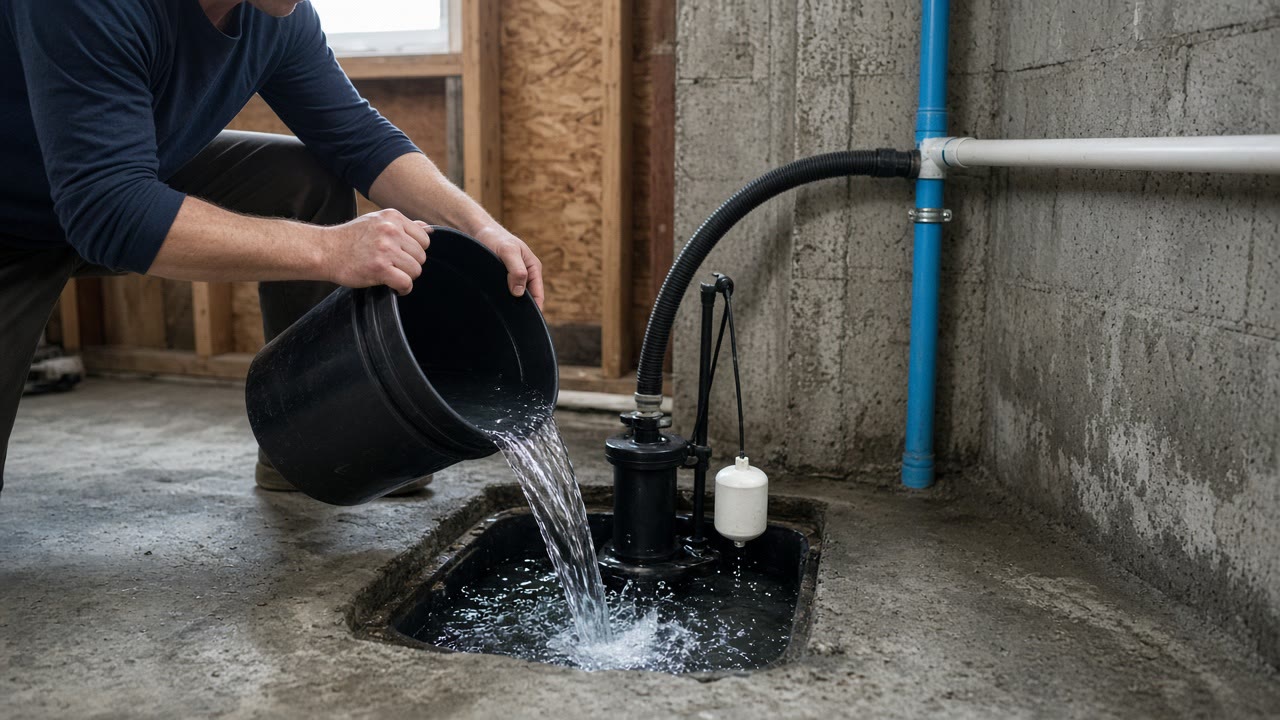
Pour a mop bucket of water into the pit until the float engages. Confirm outdoor discharge. Test before freeze-up and again before spring melt. Wipe sediment from floats; stuck floats are a classic flood cause after quiet summers.
Discharge rules and sidewalk ice
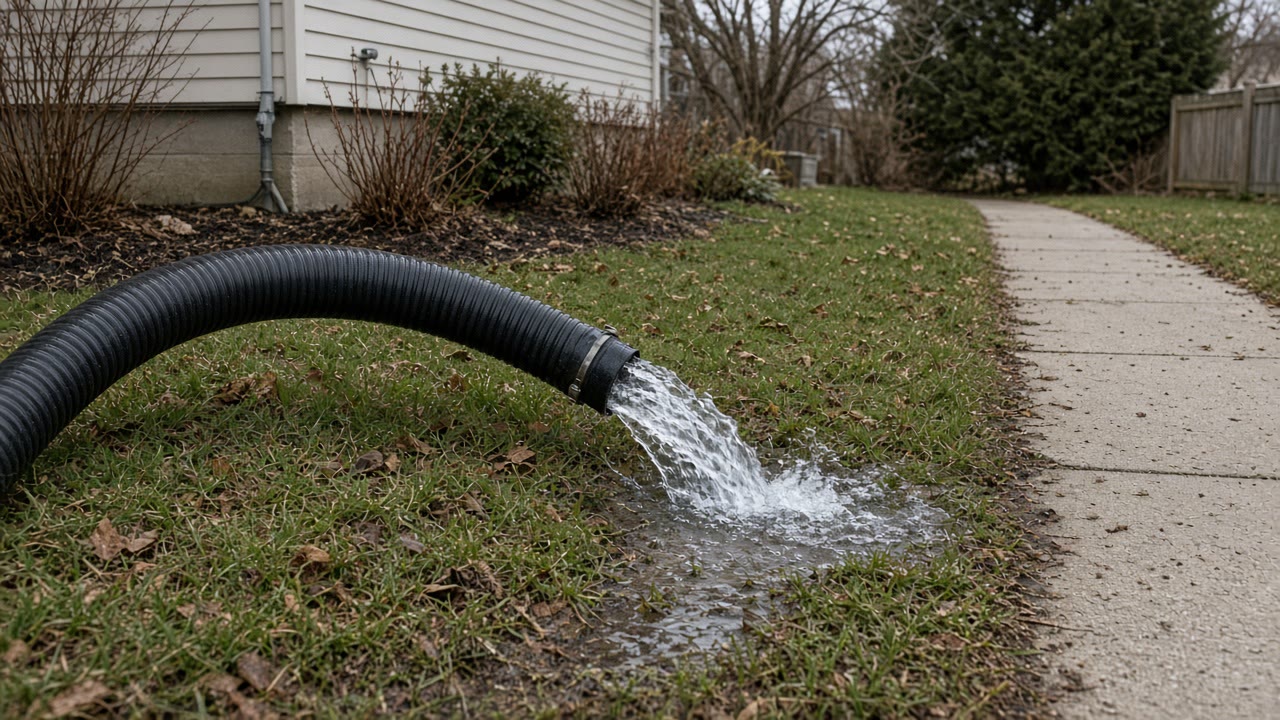
Barrie residents discuss illegal sump ties to sanitary sewers and the winter ice created when discharge spills across sidewalks. Surface discharge onto lawn or rain garden, dry wells, and properly designed underground dispersal are the usual alternatives—confirm with the City before changing connections. Storm connections are not the same as sanitary connections.
Disconnect to Protect rebates
Barrie’s program can rebate eligible work that disconnects downspouts or foundation drains from sanitary and redirects sump discharge to surface (capped percentages and dollar limits apply). Eligibility visits must happen before work. Three quotations may be required for contractor-done foundation drain categories. This is not a general waterproofing rebate for membranes.
Cost bands (market, not ours)
Sump installation cost varies widely with pit complexity, electrical work, and whether a battery backup is included. Compare what is in the quote: basin, pump brand, check valve, discharge routing, and electrical work.
Why Barrie sumps work harder than people expect
During quiet summer weeks a sump may rarely cycle. During thaw it may run every few minutes. That swing surprises new owners who assume the pump is “broken” when it suddenly becomes audible. Frequent cycling with clear pauses can be normal on wet lots. Continuous running without rest is different—it overheats pumps and usually means water is looping back toward the foundation or inflow exceeds capacity.
Barrie forum threads about vibrating discharge pipes, mice chewing outdoor hoses, and neighbours icing sidewalks are not edge cases; they are the day-to-day friction of groundwater management in a freeze-thaw city. Plan discharge with winter in mind. A hose that works in July can create a skate rink in January if it empties across public walks.
Primary pump selection without the marketing fog
Horsepower and brand matter less than correct switch type, solid check valve orientation, and a basin free of debris. Pedestal and submersible designs both appear in Canadian homes; what matters is serviceability and a float that cannot trap against the basin wall. Ask whether the installer tests under load with enough water to prove the discharge path, not just a quick plug-in.
If your waterproofing quote includes “a sump” as a single line item, ask which pump, which basin, and whether electrical work is included. Some basements need a dedicated circuit. Some need a new pit cut into the slab. Those details change price more than a brochure horsepower number.
Layered redundancy that matches real outages
Short outages during thunderstorms are common. Multi-day outages are less common but catastrophic if they hit mid-melt. A practical stack for flood-prone Barrie basements is a strong primary pump, a battery backup secondary pump, a floor water alarm, and a generator plan for long events. Not every home needs every layer. Finished basements with high melt inflow deserve more redundancy than dry storage rooms that barely wet the pit.
Battery maintenance is part of ownership. Homeowners discuss multi-year battery replacement cycles; ignoring the battery turns a backup into a false comfort. Test the backup the same way you test the primary—on a schedule, not during the flood.
Rebates, permits, and paperwork timing
Disconnect to Protect can offset eligible disconnection and surface-discharge work, but only inside Barrie’s municipal boundary, only while funding lasts, and only when City eligibility steps happen before construction. If a contractor promises “we handle the rebate” without mentioning the City visit and quotation rules, slow down and read the City page. Keep itemized paid invoices; programs that reimburse homeowners are picky about documentation.
Plumbing permits apply when you alter sanitary or related drain systems. Sump discharge changes that interact with building drains need professional clarity—do not improvise a laundry-tub connection because it looks convenient. Local discussion is blunt: sanitary ties for foundation water are not the accepted path.
Aftercare checklist
- Seasonal bucket test of primary and backup
- Clear outdoor discharge before freeze and after melt
- Listen for short-cycling that suggests a failed check valve
- Keep the lid accessible after finishing projects
- Replace aging batteries on the manufacturer’s interval
See also: interior systems that feed the pit, and exterior work that can reduce how hard the pump must run.
Discharge design for freeze-thaw streets
Barrie sidewalks collect ice when sump water sheets across them. Extending a flexible hose a few metres onto lawn helps in mild weather and fails when the hose freezes solid. Buried lines to a dry well or percolation gallery keep water off walks if sized for the inflow and kept clear of roots. Whatever you choose, the outlet should not circle back to the foundation trench—recirculation is a classic reason pumps run themselves to death.
If you share a tight side yard with a neighbour, plan the outlet so you are not flooding their walk or garage slab. Local threads show how quickly courtesy issues become City complaints. A quiet, legal discharge is part of being a good Barrie neighbour during melt.
Integrating sump work with waterproofing scopes
When interior weeping tile is installed, the sump is not an accessory—it is the exit. Size the basin for simultaneous inflow from multiple elevations. When exterior tile is renewed, confirm whether it ties into the same pit or a separate one. Dual pits appear on larger footprints and walkouts. Electrical locations, GFCI protection, and alarm placement belong on the drawing, not as afterthoughts on install day.
If a plumber installs a backwater valve in the same project window, keep scopes distinct in writing. Groundwater management and sanitary backup protection solve different floods. Homeowners who conflate them buy the wrong urgency.
Maintenance calendar you can actually keep
- Autumn: bucket test; clear outdoor outlet before freeze
- Mid-winter thaw: listen for short-cycling; clear ice at the outlet
- Spring melt: expect heavy duty cycles; verify backup battery charge
- Summer: quiet period—still test once; clean float of sediment
Write the test dates on a tag near the basin. Future you—or a buyer’s inspector—will thank present you.
Sump pump FAQs
If power goes out in a Barrie rainstorm without a battery backup, will the basement instantly flood?
Not always instantly — risk depends on how fast weeping tile fills the pit. Once the pit and connected drains fill, water has nowhere to go but up. Battery or water-powered backups reduce that risk.
Is a battery backup worth it, or is a second pump / generator better?
Battery backup covers short outages and often uses a secondary DC pump if the primary fails. Extended outages may need a generator. Water-powered backups exist but need municipal water pressure and backflow protection.
My Barrie sump runs constantly after rain/snowmelt — is that normal?
Frequent cycling during thaw and rain can be normal on wet lots; non-stop running without pause risks burnout and needs diagnosis (discharge recirculating to foundation, failed check valve, overwhelming inflow). Do not unplug it.
How do I test my sump pump?
Pour water into the pit (for example a mop bucket) until the float engages and confirm discharge outdoors away from the foundation. Test before winter and spring melt season.
Is it illegal to connect a sump pump to the sanitary sewer in Barrie?
Local Barrie discussion and Ontario plumbing practice: discharging sump/foundation drainage to the sanitary sewer is not allowed; storm connections and surface or french-drain discharges are different questions. Confirm with the City before changing discharge.
My sump discharge freezes on the sidewalk — what can I do?
A common Barrie complaint is surface discharge icing sidewalks. Options include extending discharge onto pervious lawn or rain garden, or a dry well / weeping gallery away from the foundation — not dumping to sanitary. Disconnect to Protect may rebate eligible redirects to surface discharge.
Can Disconnect to Protect help pay for a new sump?
Yes if the work matches program categories (for example disconnect foundation drain from sanitary and install sump with surface discharge) after City eligibility visit and permits. Cap percentages and dollar limits are set by the City. General “new sump for waterproofing” without disconnection may not qualify.
Is a sump pump alone enough to waterproof my basement?
A pump only removes water that reaches the pit. Without functioning weeping tile or drains directing water there, a pump will not stop wall or cove leaks.
How often should batteries / pumps be replaced?
Homeowners commonly replace backup batteries on a multi-year cycle (about five years is often cited in discussion) and treat primary pumps as wear items to test regularly. Follow manufacturer specifications.
What backup gear should I get?
A common stack is a reliable primary pump, a secondary or battery backup, and a water alarm; add a generator for long outages. Match gear to how wet the pit runs in Barrie spring melt.